
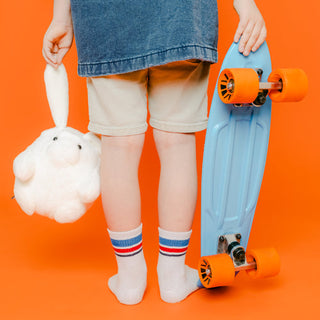
We often tend to associate plushes with childhood and innocence. But they are much more than simple toys.
Stuffed animals can also be genuine therapeutic tools, for children and adults alike.
In recent years, anti-stress and anti-anxiety plushes have experienced booming success. We dedicate this article to them!

What are the therapeutic effects of plushes?
Stress, anxiety, depression, sleep: how can plushes help you? Here are some of the recognized benefits of plushes on adult mental health.
Anti-stress plushes
In a world where stress seems to be an integral part of our daily lives, finding effective ways to manage it is crucial. Stuffed animals can be of great help, both for children and for teenagers and adults.
Firstly, the sensation of holding a soft, comfortable plush against us naturally has a soothing effect, providing a sense of security and comfort. This sensation is surely linked to our childhood, when we snuggled up with our precious comfort blankets to fall asleep.
Physical contact, even with an inanimate object like a plush, can trigger the release of oxytocin, often called the "cuddle hormone." Oxytocin plays a key role in creating social bonds and reducing stress.
Although it doesn't replace human contact, a plush can offer a form of comfort to combat episodes of stress or anxiety.
It is also recognized that plushes serve as a cognitive distraction, helping to divert the mind from stressful or anxious thoughts. Thus, your plush can be of great help when you feel overwhelmed or unable to stop stressful thoughts.
And in addition to these anti-stress effects, plushes are known and recognized for improving mood, promoting better sleep, and increasing the general sense of well-being.
Also Read: 5 Reasons to Have a Plush During a Crisis.
Anti-anxiety plushes
Often confused with stress, anxiety is nevertheless a different mental state. It is a persistent state that can exist even in the absence of a specific trigger.
For people suffering from anxiety disorders, physical interaction with a plush can help control symptoms. Stuffed animals create a presence and companionship that help reduce isolation and anxiety, especially in cases of social anxiety.
As with stress, plushes can also serve as cognitive distraction for those suffering from anxiety. By offering something tangible to focus on, they help divert the mind from anxious thoughts.
Finally, plushes are recognized as a powerful transitional object by many therapists. Although the transitional object is most often associated with childhood, it is not uncommon for adults to also need them. In the context of adult mental health, these objects can even play a key role in the management of mental disorders such as anxiety, and even depression.
Emotional support and fighting depression
For people struggling with depression or trauma, having a plush or comfort object can offer significant emotional support.
While not a substitute for professional therapy or social support, the emotional connection some people can develop with a plush can help alleviate feelings of sadness or loneliness.
In the context of play therapy, for example, therapeutic plushes help patients to express their feelings and emotions in a non-verbal way.
Seniors and Alzheimer's
Therapeutic plushes have recently made their way into nursing homes and retirement homes, with great success among people with Alzheimer's disease.
They help to stimulate memories, promote social interaction and bring comfort and solace to elderly people who often feel lonely and isolated.
Also Read: The Benefits of Plushes for Seniors and Alzheimer's Patients.
People with autism spectrum disorder
People with autism spectrum disorder can also benefit from interacting with plushes.
As we saw above, plushes can help to develop social and emotional skills.
Some weighted plushes, also called weighted plush toys, provide specific sensory stimulation because they offer proprioceptive information that helps people with autism to perceive the position of their body in space more accurately. This provides a sense of security, tranquility and relaxation, promoting calm and concentration.

How to choose an anti-stress plush?
Choosing an anti-stress plush should not be taken lightly. For this therapeutic plush to provide the expected benefits, several important criteria must be considered.
Indeed, whether for a child or an adult, each individual is unique. What works for one person may not work for another. Therefore, personal needs and preferences must be taken into account.
Whether it's the shape, size, material, weight, durability, maintenance, safety, or cost, each criterion plays an essential role in the effectiveness of an anti-stress plush.
1. The shape of the plush
Of course, choosing a plush that visually appeals to its user is essential.
A particular animal can evoke happy memories or a strong emotional connection. For example, someone who grew up with a dog might find particular comfort in a dog plush. Cat plush toys are also widely used in therapy.
Others might prefer a plush of an animal with which they feel an affinity, or which symbolizes qualities they admire. For example, a lion plush evokes strength and courage, while a therapeutic teddy bear symbolizes comfort and protection.
Certain animals are considered to have soothing and anti-stress effects. For example, rabbits are associated with tranquility and gentleness, and dolphins with joy and freedom.

2. Size
For an anti-stress plush to be effective, it must be the appropriate size, neither too small nor too large!
If the plush is too small, it will be more difficult to hold or cuddle, reducing its therapeutic effectiveness.
But a plush that is too large can also be bulky and difficult to manipulate and transport.
To give you an idea, the ideal size for an anti-stress plush for an adult is roughly that of a standard pillow.
3. The material
Touch is one of the most important senses involved in therapeutic interaction with a plush. The sensation of softness can have a significant impact on our state of mind and stress levels.
Stuffed animals made of soft materials, such as cotton, velvet, or faux fur, are the most effective. These fabrics are pleasant to the touch, comforting, and soothing, which helps to reduce stress and anxiety.
It is also preferable to choose a hypoallergenic plush, especially if the user has allergies. An anti-stress plush is meant to be cuddled: it will be in close contact with the skin. So make sure it will not cause irritation or allergies.
4. Weight
Some therapeutic or anti-stress plushes are weighted to provide a sense of pressure that plays a soothing role, particularly for people with autism spectrum disorder.
If you opt for a weighted plush, make sure its weight is suitable for the user. Generally, a weighted plush should not weigh more than 10% of the user's body weight.
Also Read: 5 Good Reasons to Give a Plush to Your Girlfriend!
5. Quality and durability
An anti-stress plush is a constant companion. Due to this constant relationship and frequent use, it is essential that it be of high quality and durable.
A therapeutic plush is not an object that is changed frequently. On the contrary, the effectiveness of the plush is partly based on the familiarity and sense of security it provides, elements that strengthen over time. It must therefore be able to withstand the test of time, both physically and emotionally!
Investing in a high-quality plush is an investment in the user's well-being. That's why at La Pelucherie, we guarantee all our plushes for life!
Also Read: How to Repair a Torn Comfort Blanket or Plush?
6. Ease of cleaning
Stuffed animals are well known for being dust traps! So, to ensure your anti-stress plush stays clean and hygienic, prefer a machine-washable plush, like those from La Pelucherie.
7. Safety
Finally, if the anti-stress plush is intended for a baby or young child, make sure it presents no danger! Avoid small parts that could be swallowed (eyes, nose, etc.) and always check that it complies with European safety standards.
Also Read: Baby Plushes, Tips and Tricks for Making the Right Choice.
While not a universal cure, a stress-relief plush toy is certainly a valuable tool in the arsenal of stress and anxiety management, and mental health. A well-chosen plush toy can make a big difference.
What about you? Do you have a stress-relief plush toy at home? Which one did you choose?