
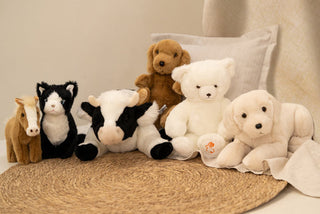
Alzheimer's disease is a chronic and progressive neurodegenerative disease that primarily affects the elderly. It impairs cognitive functions, such as memory and attention, and significantly disrupts the daily lives of patients, their families, and their caregivers.
In the midst of this delicate situation, an unexpected therapeutic tool has proven effective in improving the quality of life of patients: plushes.
Let's find out more! Here is a fascinating article revealing the benefits of plushes for the elderly and people with Alzheimer's disease.
Read Also: The Ultimate Gift Guide for Grandmothers, 50 Original Ideas!

Therapeutic plushes for the elderly & Alzheimer's patients
For the elderly, especially those with Alzheimer's disease, soft plushes have invaluable therapeutic effects by providing emotional comfort, a communication tool, sensory stimulation, and memory aid.
Emotional comfort
Stuffed animals are associated with childhood, during which they represented a symbol of comfort and security. And it has been proven that as we grow up, we do not lose this emotional connection to these soft and comforting objects.
For the elderly, and especially those with Alzheimer's disease, plushes embody this familiar and soothing presence in a world that is increasingly confusing and unpredictable due to the disease.
The simple act of hugging a plush helps to reduce anxiety and stress, providing a tactile sensation of security and comfort. Even more, plushes evoke feelings of happiness and joy in people with cognitive disorders such as Alzheimer's disease.
Finally, our dear plushes often become true life companions for elderly people who feel lonely or isolated.
Read Also: Anti-Stress Plushes, The Therapeutic Benefits of Plushes.
A communication tool
Another benefit of plushes for the elderly, and especially those with Alzheimer's disease, is their role as communication support.
One of the frequent symptoms of this neurodegenerative disease is difficulty expressing feelings, emotions, and needs.
In babies as well as adults, plushes stimulate non-verbal communication and promote social interaction, which is absolutely fundamental to fighting the progression of Alzheimer's symptoms and improving patients' quality of life.
Sensory stimulation
Sensory stimulation plays a crucial role in the care of people with Alzheimer's. This disease primarily affects an individual's cognitive abilities, including memory, attention, and language.
However, many studies have shown that the senses, such as hearing, touch, smell, taste, and sight, often remain preserved, even in the advanced stages of the disease. And stimulating these senses has a significant impact on patients' well-being and quality of life.
In this context, plushes have a major role to play. They offer a variety of sensory experiences: soft touch, different colors, soothing sounds, and even relaxing aromas.
It is essential to choose quality plushes for the elderly. At the tactile level especially, plushes must be made with materials that are soft to the touch. This softness, combined with the natural warmth of the plush when it is hugged, provides instant comfort by recalling memories of hugs and providing a feeling of calm.
Another important point for choosing a therapeutic plush is its colors and rounded shapes which help to further stimulate visual attention, entertain, and brighten the mood of the elderly.
At the auditory level, some plushes can emit sounds like soft music or heartbeats, which can have a calming and soothing effect. However, be careful with the choice of sounds, because if they are too loud or unpleasant, it could have the opposite effect and create stress and anxiety.
As for olfactory stimulation, it is recommended to infuse Alzheimer's plushes with relaxing aromas or essential oils such as lavender or chamomile. These scents can help reduce anxiety and promote relaxation.
Finally, like empathy dolls, weighted plushes offer proprioceptive stimulation - they provide pressure or weight that reinforces the feeling of security.
Read Also: Why Give Your Grandmother a Plush for Her Birthday?
A memory aid
In Alzheimer's disease, the first faculty generally affected is memory. Sufferers may forget important information about their past, such as the names of their children or where they lived. They may also have difficulty recognizing familiar faces.
Therapeutic support strategies such as the use of plushes or other familiar objects can be particularly effective because they help to stimulate and reinforce long-term memories.
Thus, plushes often serve as links to happy memories, recalling moments from childhood, moments spent with children, grandchildren, or pets. These positive associations stimulate memory and help maintain identity, which is very important for people with Alzheimer's.

The Oscar Cat Plush, A High-Quality Plush by La Pelucherie
The Story of Paro, the interactive seal plush for Alzheimer's
The rise of technology has enabled the creation of interactive plushes specially designed for the elderly or those with Alzheimer's disease. These plushes can reproduce the movements and sounds of real animals, offering a certain level of stimulation and interaction for the patient.
The best-known example is PARO, the interactive baby seal now used in many nursing homes and retirement homes in France and around the world. There is also Pepper, an emotional robot designed to combat neurobehavioral disorders in Alzheimer's disease.
PARO's design has been carefully studied to optimize its therapeutic potential. Its fur is soft and pleasant to the touch. Equipped with Artificial Intelligence, PARO can also interact reactively with patients : it can move its head and eyes, emit sounds similar to those of a real baby seal, and react to petting and voice.
Research has shown that a plush like PARO reduces agitation and aggression, improves social interactions, increases physical activity levels, and promotes relaxation and well-being in elderly people with Alzheimer's disease.
While PARO is primarily intended for medical use in nursing homes or retirement homes, particularly due to its cost (7,000 euros!), the various studies conducted on it have helped to demonstrate the benefits of plushes for the elderly and particularly those suffering from Alzheimer's.
Share your experiences with us! Is one of your loved ones suffering from Alzheimer's disease? Have you observed the benefits of a plush on their health and well-being?
Read Also: 4 Reasons to Adopt a Giant Plush!